Get started: Download templates now
What is a Citizen Builder Model?
A Citizen Builder Model (or a Citizen Developer Model) is an approach where lines of business, rather than a central entity, are responsible for digital adoption content development and optimization after the software is sanctioned by IT.
This model can be either fully decentralized or hybrid, with varying levels of central governance.
Benefits of a Citizen Builder Model include increased volume and quality of content, improved speed and flexibility, and enhanced risk management against attrition.
By following these best practices and taking a phased approach, organizations can successfully transition to a more distributed and efficient content creation model while maintaining quality and alignment with business objectives.
Is a citizen builder model right for me?
Here are 5 common challenges that signal the need for a more distributed approach:
- Misalignment on strategy or value narratives
- Resource constraints; Backlog of requests and/or inability to support departments or applications effectively
- Slow time to delivery for DAP content and/or inability to keep pace with software releases or new process rollouts
- Lack of domain expertise
- Bottlenecks caused by over-reliance on few key DAP stakeholders or Builders
10 Steps For Successful Implementation
The following are ten steps to implementing a successful citizen builder model. Expand each for a description of activities or download in checklist form.
Step 1: Readiness Assessment
Before implementing a citizen builder model, assess the readiness of departments:
- Ensure functional leadership demonstrates championship for and compliance with policies and procedures for standardization
- Verify that functional leadership understands the vision of Digital Adoption frameworks within the context of the business challenges & opportunities
- Confirm that the department would benefit from localized ownership and has capacity based on demand management
Step 2: Defined Pilot
- Choose 2-3 departments for a pilot program lasting about two quarters
- Select departments with aligned resources (Executive Sponsor, Technical Contact, Subject Matter Experts)
- Ensure agreement on timeline and bandwidth requirements for certification on WalkMe content building and solutioning
Step 3: Core Processes
- Develop a RACI (Responsible, Accountable, Consulted, Informed) matrix for central team and citizen builders
- Create decision-making criteria for bringing on new citizen builders
- Implement an escalation process for build support
- Implement a permissions review process for citizen-built solutions (eg. who can publish, archive, review reports, etc)
- Provide training on data privacy regulations and company-specific security policies
Step 4: Quality Control Processes
- Develop a peer review system among citizen builders
- Implement automated quality checks for common issues
- Provide regular quality assurance training and updates
Step 5: Workload Balancing
- Implement a tiered approval system based on the complexity and impact of projects
- Create a central repository of approved components and templates to ensure consistency
- Establish regular governance reviews to adjust policies as the program matures
Step 6: Certification Path
The following are recommended steps for a Builder Certification Path.
- Complete necessary training (e.g., Digital Adoption Institute courses - See here for recommended Learning Paths by DAP Role)
- Create a shadow-building process with central team guidance
- Conduct QA and maintenance with central team oversight
- Complete certification test after successful projects
Note: Certification tests in WalkMe's Digital Adoption Institute are now free! Learn more here.
Step 7: Knowledge & Community Forums
- Establish a knowledge base or hub for internal resources
- Conduct regular knowledge sharing meetings and demos
- Create forums or chat channels for citizen builders to share ideas and ask questions
- Organize regular hackathons or innovation challenges to encourage creativity
- Recognize and reward citizen builders who create particularly impactful solutions
Step 8: Monitoring & Compliance
The following are recommended analyses of citizen builder performance:
- Monitor the number of active citizen builders and their retention rate
- Define how citizen builder skills factor into performance reviews and promotions.
And of user permission levels:
- Conduct regular audits of user permissions
- Provide training on user roles and any changes to standard roles
- Stay informed about product updates that may add feature options to user permissions
Step 9: Value Reporting Framework
- Define key performance indicators (KPIs) for the citizen builder program
- Track the reduction in IT backlog for small projects and enhancements
- Measure the time saved by business units through citizen-built solutions
- Establish a cadence for value reporting (e.g., mid-year and end-of-year)
- Provide templates and guidelines for reporting
Step 10: Career Development Opportunities
Elevate your star Builders with these leadership opportunities:
- Lead Tip Tuesdays or Office Hours
- 1:1 or group mentorship program for other builders
- Become a Subject Matter Expert in a certain solution, application, or business workflow domain
Best in Class Tip: Focus on Continuous Strategic Alignment
As you increase distribution of Building skills, here are 3 ways to ensure projects remain tied to strategic objectives:
- Encourage citizen builders to tie their projects to specific business KPIs
- Implement a business case requirement for larger citizen-built projects
- Regularly review the alignment of citizen builder activities with overall business strategy
3-Phase Transition Approach
Consider a phased approach to transition from a centralized to a hybrid or decentralized model:
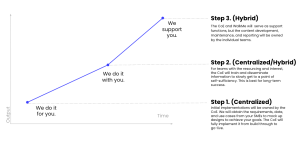
- Centralized Phase: Central team owns strategy and execution for new content delivery
- Transition Phase: Departments begin to learn and take ownership of content delivery with central team support
- Hybrid/Decentralized Phase: Both central team and departments have resources to provide content delivery, with central team supporting strategic initiatives
Citizen Builder Checklist For Success