Brief Overview
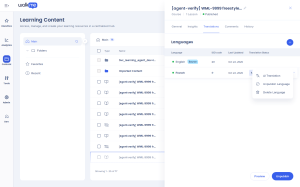
You add and manage languages for learning content from the Translations tab of a learning item. Languages you add apply to that learning item only. You can also add languages to several learning items at once. This article walks through how to add languages, add them in bulk, delete them, and manage language-level actions.
Open the Translations Tab
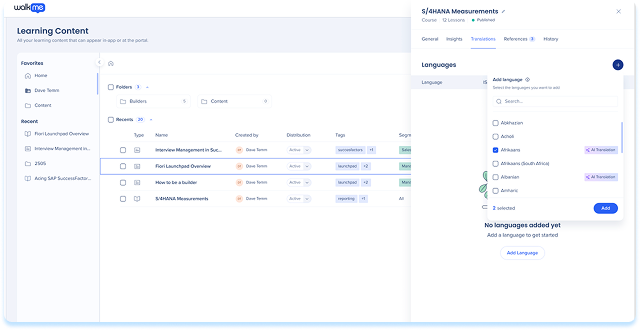
- Go to the Learning Content page
- You can either:
- Select the Info icon for a learning item
- Select the Options menu in the item row and select Translations
- Select the Translations tab
Add Languages
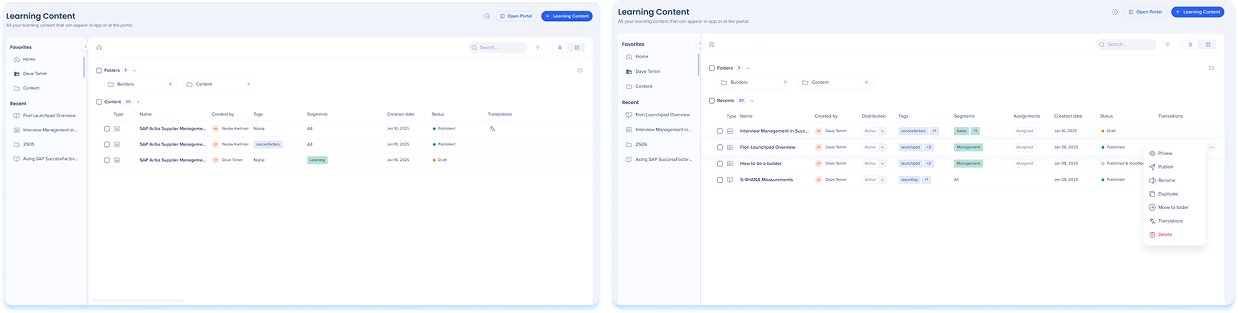
Add languages when you want to create translated versions of your content.
- Select Add language
- Search for and select one or more languages
- Review AI translation availability shown next to supported languages
- Select Add
Remarque
- Added languages apply to this learning item only
- You need to translate and publish the language for each learning item where it should appear
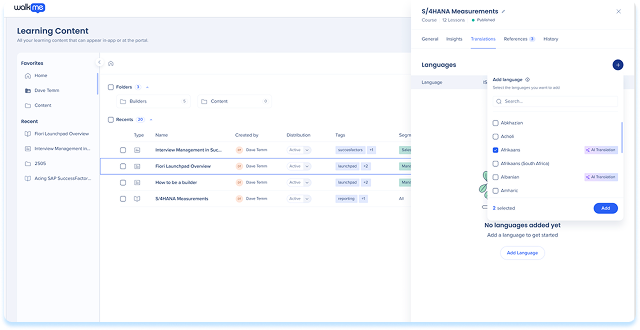
Tableau des langues
Vous ajoutez et gérez les langues à partir du tableau des langues dans l'onglet Traductions. Le tableau affiche toutes les langues associées à l'élément d'apprentissage et leur état actuel.
Chaque ligne dans le tableau représente une langue et comprend :
- Langue : le nom de la langue
- Code ISO : le code de langue standardisé utilisé pour l'identification
- Statut : si la langue est disponible, traduite ou nécessite une attention
- Dernière mise à jour : la date et l'heure de la dernière mise à jour de la traduction
- Mis à jour par : l'utilisateur qui a mis à jour la traduction pour la dernière fois
- Statut de la traduction : l'état actuel de la traduction
Remarque
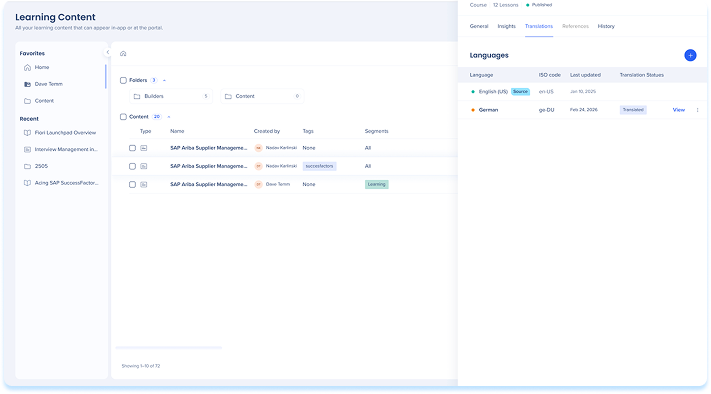
The Source language is the original version used to create all other translations. It is identified by a label next to the language name. Updates to this version will trigger a Not in sync status for all other languages.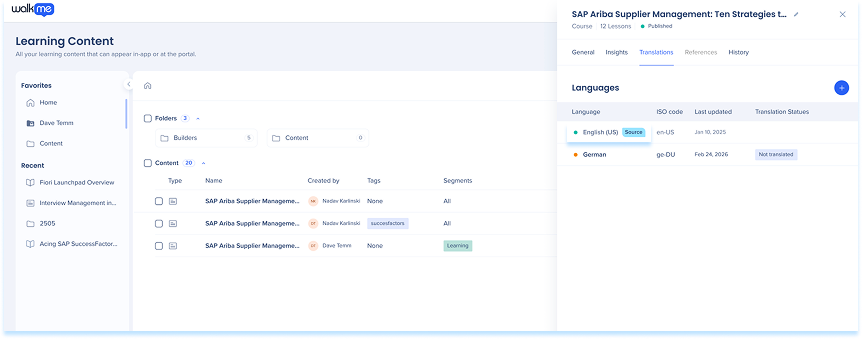
Change the Source Language
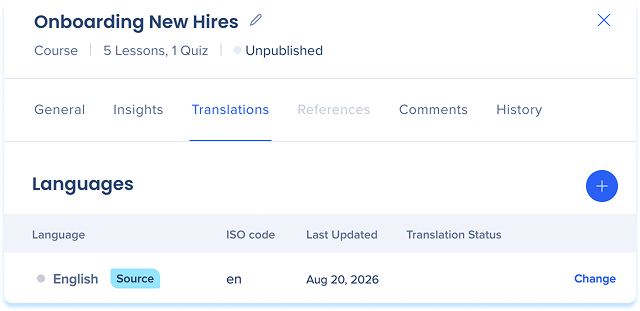
The source language is the version all translations are created from. You can change it from the Translations tab of a learning item.
- In the languages table, select Change next to the source language
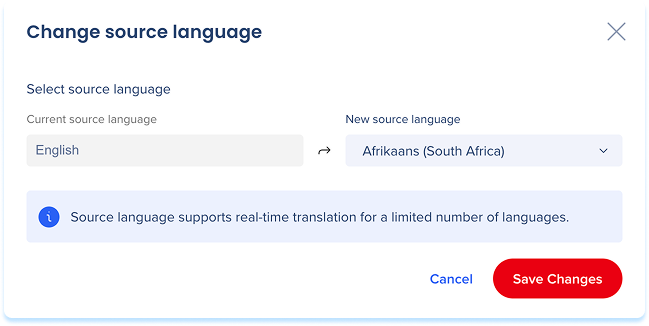
- From the New source language dropdown, choose a language
- Select Save Changes
Lorsque vous modifiez la langue source
- The previous source language becomes a translation in the languages table
- The course content isn't rewritten
- If the language you choose already has a translation, a message warns you it will be removed
Translation status
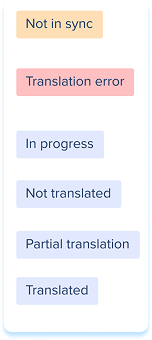
The status column indicates the current state of each localized version:
- Not translated: No translation has been provided for this language
- Translation in progress: The translation is currently being created or edited
- Translated: The content is translated and matches the current source language version
- Partial translation: Only a portion of the content has been translated
- Not in sync: The source content was updated after the translation was finalized
- Translation error: The system encountered an issue during the translation process
- Draft (auto): Learning Arc created this language automatically when a learner asked for it. It isn't published by an author
Add a Language to Several Learning Items
- On the Learning Content page, select the learning items
- In the action bar, select Add language
- In the Add languages to [number] learning items dialog, select the languages
- Select Add
Remarque
- Source language: A learning item whose source language is one you chose is skipped, and the message says how many were skipped
- Folders: Add language isn't available when the selection includes folders or Enable Now items
- Locked items: Add language is turned off when the selection includes a locked course
Delete a Language from a Learning Item
- In the languages table, select the Options menu in the language row
- Select Delete Language
Remarque
- Permanent: The language and everything translated into it are removed from this learning item. This can't be undone
- Other items: The language stays on other learning items
- Limits: You can't delete the source language or a language that is being translated
- Learner requests: If a learner later asks for the deleted language, it can come back as Draft (auto)