Get started: Download templates now
Brief Overview
Business Value Alignment is the process of creating unity between the corporate and department strategic initiatives and the utilization of your Digital Adoption Platform to drive business results.
Companies with strong business value alignment can articulate the reason each WalkMe solution has been created. These companies typically also have strong process around Maintenance and Optimization of their WalkMe solutions. As business objectives change over time, a high-impact digital adoption solution should also adjust.
Watch the following video from our expert Digital Transformation team on how companies are approaching Business Value Alignment.
How This Impacts Your Program
Outcomes if done well
- Buy-in from Executive Sponsors
- Cost containment through optimized resource use (all built content has a specific purpose)
- Prioritized Book of Work
- Business case
Outcomes if not done well
- Difficult to prove impact over time
- Unable to capture executive attention or prioritization
- Inability to scale
- Superfluous or less impactful content on tech-stack
Best in Class Approach
WalkMe's Strategy & Value Framework: The 4 P's
Visit Download Templates & Tools below to download a 4 P's Workbook.
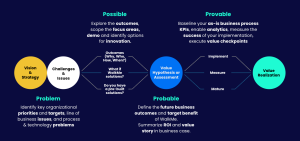
Problem
Completing this stage results in a high-level digital adoption vision aligned to corporate strategy.
How:
- Identify key organizational priorities and targets, line of business issues, and process & technology problems
Possible
Completing this stage results in opportunities you will prioritize for your WalkMe book of work (prioritized projects).
How:
- Explore the outcomes (Why, Who, How, When?)
- Scope the focus areas (Which WalkMe solutions should we build?)
- Identify options for innovation (What non-WalkMe solutions are already in place that we may be able to optimize or replace?)
Probable
This stage results in a Value Hypothesis (or Value Assessment).
How:
- Define the future business outcomes and target benefit of WalkMe
- Summarize ROI and value story in your business case
Provable
This is the stage you need to achieve Value Realization.
How:
- Baseline your as-is business process KPIs
- Enable analytics
- Measure the success of your implementation
- Execute value checkpoints
Value in your Prioritization & Intake Processes
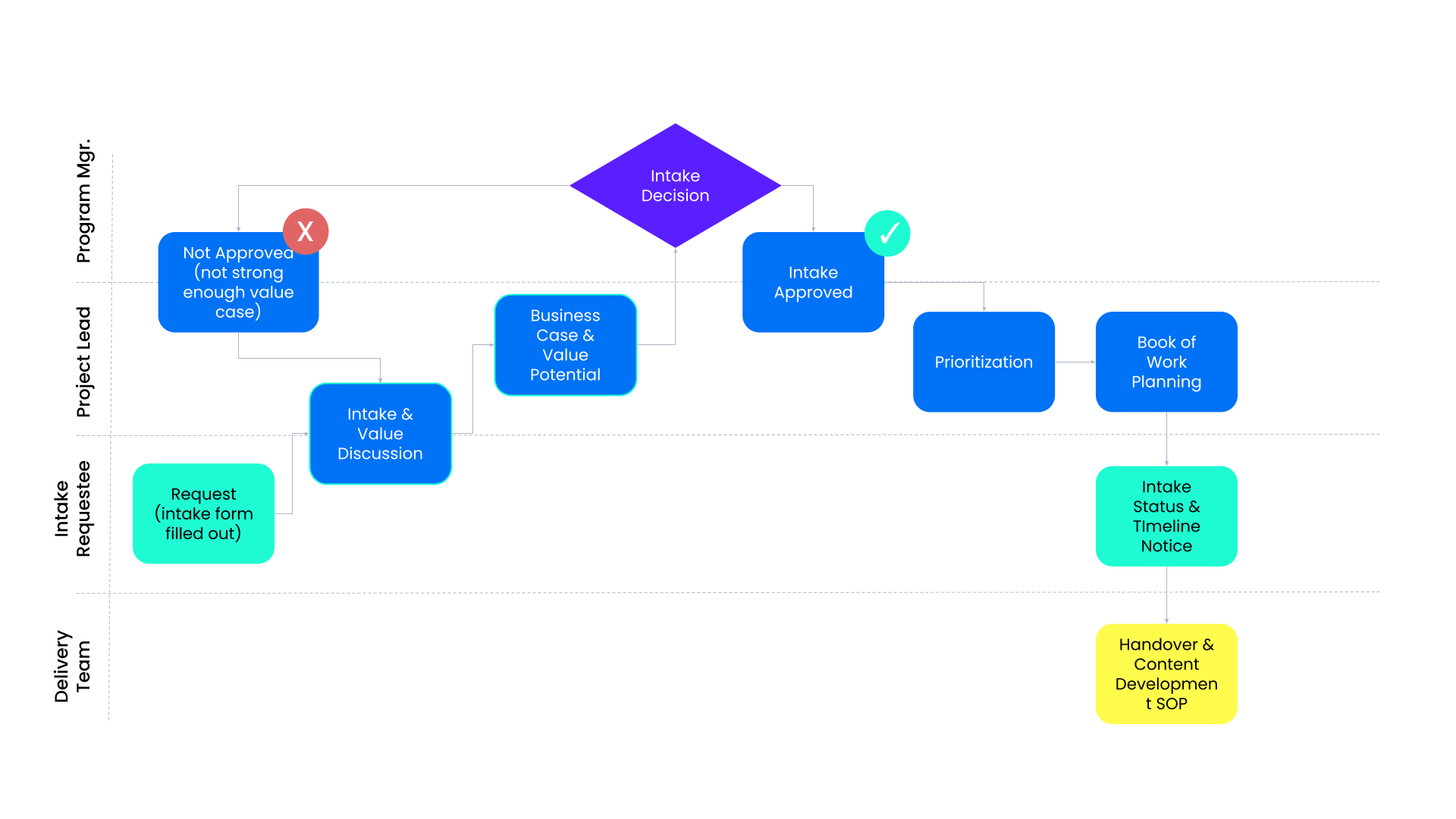
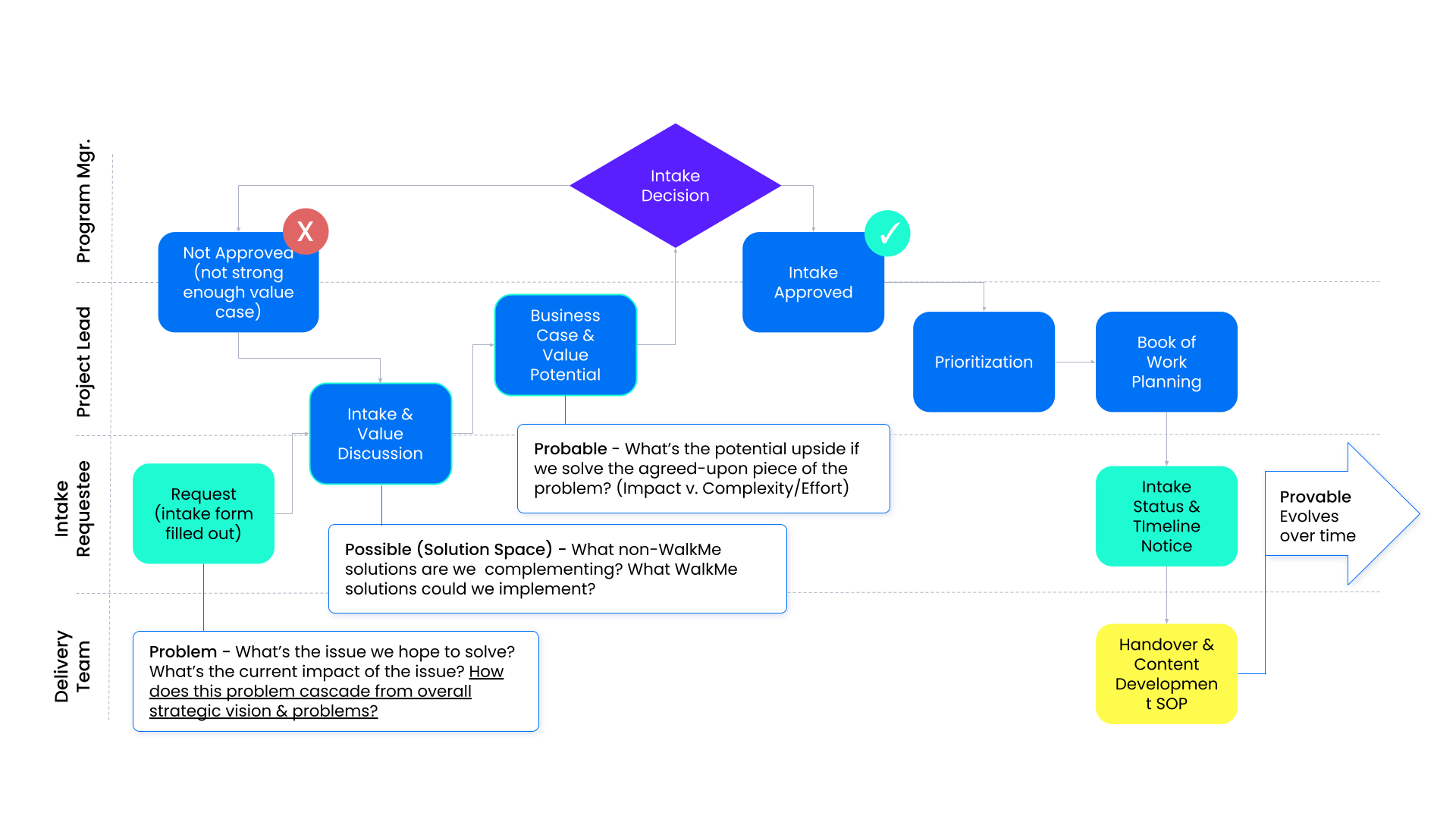
Think of your intake and prioritization processes as a series of value agreements between the content delivery team and the business stakeholder(s).
To ensure delivery resources are spending time on the right WalkMe projects, you need rigor in Problem discovery, as well as a clear outline of the Possible, Probable, and Provable.
See for below how the Strategy & Value Framework should be integrated into your flow before you start building WalkMe content. Download these visuals as slides & make them your own by visiting Download Templates & Tools in this article.
Value Stories
Your Provable isn't only WalkMe engagement numbers. What did it mean to the business? Telling a value story tailored to your target audience is the best framework for impactful communication. Here's how Value Stories enhance Value Realization:
Value Realization: 250,000 Customer Service Representative interactions with WalkMe content * X time savings per interaction = X time saved
Value Realization as a Value Story: 2% decrease in Average Handle Time over the last 2 quarters, correlated to 250,000 interactions with WalkMe automation built on Case Management workflows such as Creating Case/Tickets, Case/Ticket Categorization, and Prioritizing Cases/Tickets.
Expand below for role levels and sample metrics they will be interested in when telling your value stories.
Value to Executives
Executive metrics reveal how the organization is performing over time and if strategic objectives will be met. Sample metrics include:
- Operational benefits
- Customer benefits
- Enterprise benefits
Value to Line of Business Leaders
Leaders use these metrics to support process improvement decisions and measure business outcomes. Sample metrics include:
- Cost effectiveness
- Revenue generation
- Risk & compliance
- Digital user satisfaction
- Productivity
- Cycle time
- Process efficiency
Value to Application and Service Owners
Managers rely on operational KPIs to measure the progress of initiatives. Sample metrics include:
- Shortened average lead time
- Greater up-sells and cross-sells
- Improved compliance pass/fail
- Improved process conformance
- Improved quality of product
Strategy & Value Framework (4 Pillars) Workbook
Executive Summary Template
One-page template to summarize WalkMe wins for an executive audience. Try sending on a quarterly basis.
Download here.
Kickstart Your WalkMe Value Story with AI
This guide features a ready-to-use GPT prompt designed to help you turn WalkMe engagement data into a structured, 4P strategy framework. This serves as a launch point for conversations with your internal leadership, to validate the impact of WalkMe at your organization,
Download here.
Need Help Getting Started?
Engage WalkMe's Business Value Services.
WalkMe Business Value Services (provided by the Office of the Field CTO) are complementary to our customers to analyze the realized value from your continuous investment in WalkMe solution for digital systems and applications, and to demonstrate the ongoing commitment to your business outcomes.
Ask your WalkMe Account Team for more information.