Brief Overview
Project reporting is the standardized process of creating, analyzing, and taking action based on data reporting throughout the project lifecycle.
As your Digital Adoption reach grows, the number of projects to report on grows, too. Establishing a standardized process for reporting allows for clear ownership, cross-functional involvement, and expectation setting.
This article covers classic DAP reporting via Tracked Events, Funnels, and the reports below. WalkMe AI has its own AI Dashboards (see AI Reporting & Insights) and WalkMe Learning Arc has its own Course-Level and User-Level dashboards (see the WalkMe Learning Arc Console & Content Organization Guide) – both should be pulled into the same reporting cadence you standardize here, alongside a lightweight check on Haiku tip views.
How This Impacts Your Program
✅ Benefits of operationalizing
- Sets the foundations and habits that result in stronger value processes in the long run
- Increased executive stakeholder engagement and buy in
- Optimized content
- Higher likelihood to obtain approval for additional headcount
- Increased internal recognition/DAP awareness
❌ Risks of not operationalizing
- Low or no substantiated value narrative
- Little executive stakeholder interest and/or buy in
- Live content that is broken or not optimized to maximize ROI
Common Utilizations of Project Reporting
Discovery
Purpose: The review and analysis of data to inform new project phases, improve existing project results, and assist in establishing user behavior baselines.
Common Features/Reports Used:
Progress Tracking
Purpose: The review and analysis of data to measure progress over time/comparison to the baseline data. Often utilized as a part of the value reporting process to leadership.
Common Features/Reports Used:
Good, Better, Best of Project Reporting
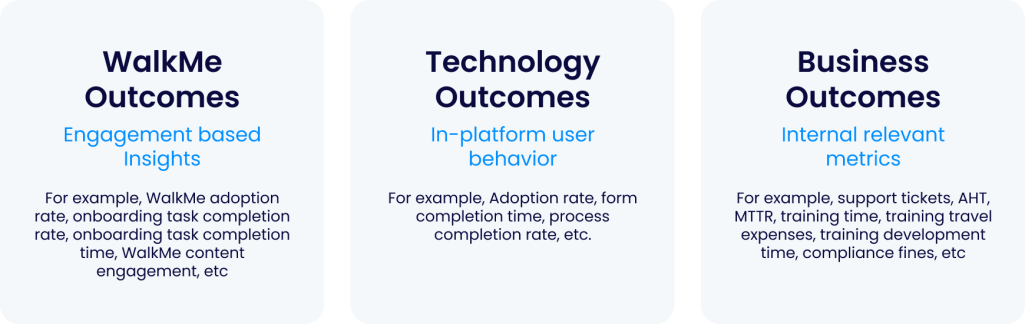
Good: WalkMe Outcomes
Better: WalkMe Outcomes + Technology Outcomes
Best: WalkMe Outcomes + Technology Outcomes + Business Outcomes
As AI and Learning Arc adoption grows, consider a fourth tier: WalkMe Outcomes + Technology Outcomes + Business Outcomes + AI/Learning Arc/Haiku Outcomes – showing not just that DAP content is being used, but that the full program (DAP, Learning Arc, AI, Haiku) is driving the same business outcome.
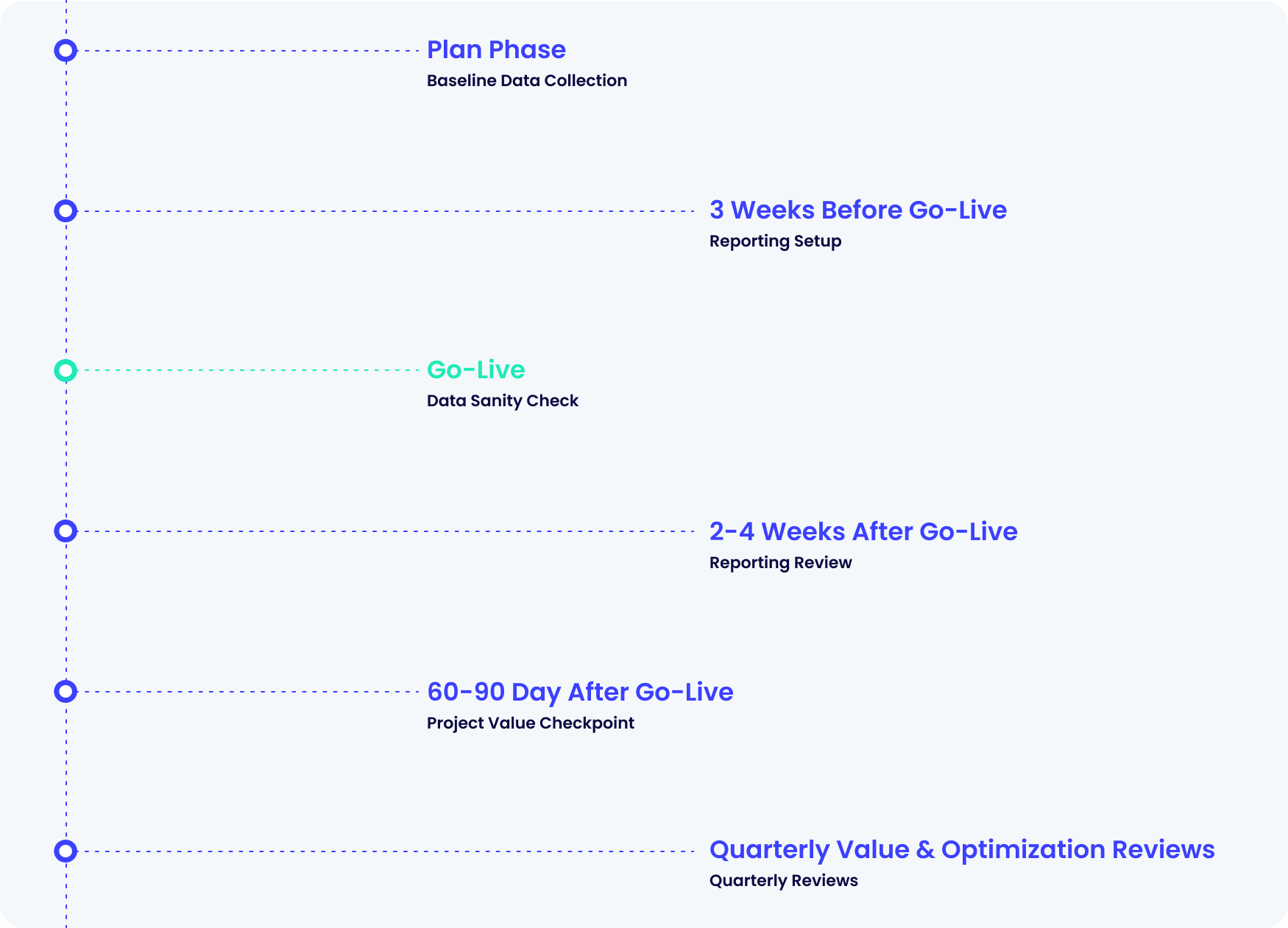
Example Reporting Timeline
Standardizing Project Reporting Checklist
When you create a Standard Operating Procedure (SOP) around Project Reporting, use this checklist to make sure you've covered the fundamentals!
Proactive Data Conversations
☐ At what points in the project lifecycle am I asking questions to my stakeholders to understand data/reporting needs and expectations?
Report Setup
☐ What data do my stakeholders need to see to measure impact? In what form and on what cadence do they need to see it?
☐ Have I aligned with all relevant stakeholders on their individual needs?
☐ Would my stakeholders benefit from raw data (e.g. through integrations), WalkMe insights reports, or both?
☐ Which WalkMe Insights reports can help me get what I need?
☐ Do I need to use the Report Builder to create custom reports, or can I get what I need out of the box?
☐ Are there any segmentation/filtering needs I can set up on the reports to optimize my stakeholders' experiences (they only see the data they need)?
☐ Would my stakeholders benefit from report subscriptions?
☐ Have I included AI Dashboards and Learning Arc dashboards in this same reporting setup, rather than treating them as separate reporting tracks?
Report Enablement
☐ If my stakeholders receive a WalkMe report/WalkMe data, do they know how to interpret it? What enablement methodology do I have to ensure they can create value narrative they need?
Reporting Meetings
☐ On what cadence are meetings needed to review project reporting?
☐ Who are the mandatory versus optional stakeholders needed for these meetings?
☐ Are there company or departmental reporting templates that need to be used?
Personnel
☐ What roles will be responsible for each step of the process?
☐ Who is needed cross-functionally to make this succeed? How does that headcount or other internal request work with the project reporting process?
☐ If a BI, Business Analyst, or other non-DAP Professional is involved in the process, what enablement may be needed and who will be responsible for providing it?
Get Started
Additional Resources & Peer Connections